Valorant, What Rawzu's Satisfying Phoenix Clips Teach About Aggressive Duelist Play
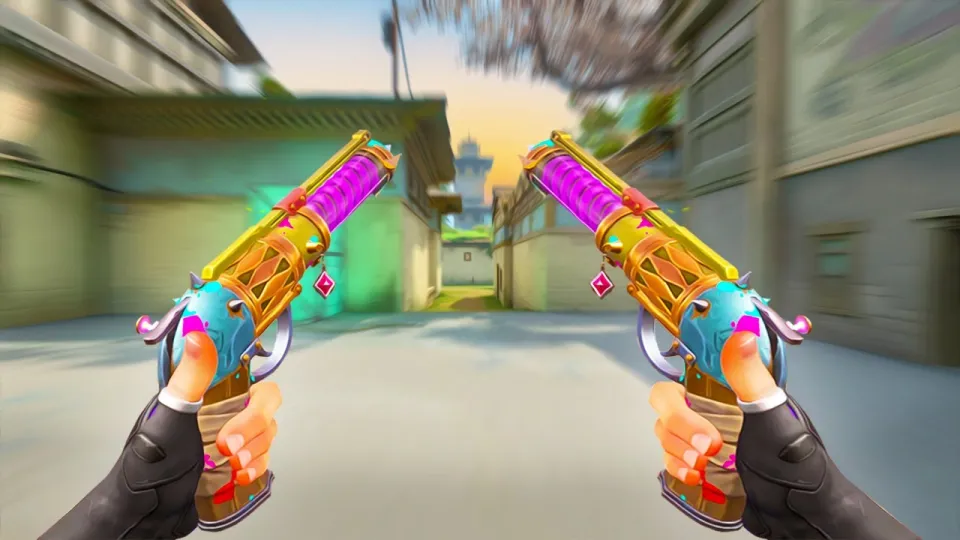
Video: 20 Minutes of Satisfying Valorant Clips
You can order the same kind of articles for your own video to boost it on YouTube and Google. Just message the Telegram bot @sat_sit_bot. The bot writes and publishes the articles itself (with your YouTube video embedded) on popular topical websites (no ads). Free trial — 50 articles.
· based on the channel Rawzu
Valorant is a 5v5 tactical shooter where two teams of agents fight over spike sites, and the duelist Phoenix turns that fight into a personal hunt: his Blaze wall blocks vision and burns anyone who touches it, Curveball blinds enemies even behind corners, and Run it Back lets him die and respawn on the spot. Rawzu's 20-minute satisfying-clip video, published on January 18, 2025, is a practical showcase of that aggressive Phoenix style, and you can watch his daily live runs at kick.com/rawzu. The clips double as a free lesson in movement, crosshair placement and economy decisions.
What "satisfying" actually means in Valorant clips
A satisfying Valorant clip is not just a multikill; it is a sequence where every input looks deliberate, from the first strafe to the final tap. In Rawzu's compilation the satisfaction comes from three repeatable ingredients: clean one-taps, fast peeks that break the enemy's crosshair placement, and commentary that reacts to the play instead of narrating it. Viewers single out a one-tap on Clove as the most satisfying moment in the whole video, which tells you what the audience actually rewards. If you want the same feel in your own gameplay, stop chasing highlight-reel flicks and start stacking small, repeatable wins.
- Pre-aim the angle before you swing, so the crosshair is already on the head level.
- Strafe between shots instead of standing still, which makes you a harder target.
- Use an ability to force the enemy out of position, then take the duel on your terms.
Rawzu's Valorant settings and peripherals explained
Rawzu's setup is built around consistency: 400 DPI with 0.625 in-game sensitivity, a 1440x1080 stretched resolution, and the crosshair code 1-6-2-2. The hardware list is a Lamzu Maya X mouse, a Zowie H-SR-SE 2 Blue mousepad, and a Zowie XL2566K 360Hz monitor. Stretched resolution widens enemy models on screen, which makes targets easier to track and headshots easier to confirm, while a low effective sensitivity keeps the crosshair steady during long strafes. The 360Hz panel matters less for aim and more for reaction time: at that refresh rate you see the enemy's peek a frame or two earlier, which is often the difference in a duelist mirror.
How to play Phoenix like an aggressive duelist
Phoenix rewards players who push first and ask questions later, but only if the push is supported by his kit. Start the round by using Blaze to cut off a long sightline, so your team can cross open ground without eating a free Op shot. Save Curveball for the moment an enemy commits to a corner, because the flash curves around geometry and blinds players who think they are safe. Hot Hands gives you a molly to clear common camping spots and, crucially, heals you when you stand in your own fire, which turns a bad trade into a reset. Run it Back is the ultimate safety net: you can entry, take a duel, die, and come back at your marker with full health, so use it to bait utility rather than to save it for a highlight.
Movement, crosshair placement and the Vandal question
Movement is the skill that separates a good Phoenix from a great one, and it is the thing viewers notice most when they try to copy Rawzu's gameplay. Counter-strafing, jump-peeking and short swings all exist to make your hitbox unpredictable while your crosshair stays at head height. The Vandal fits this style because it kills with one headshot at any range, so a player who trusts their crosshair placement does not need to spray. That is also why a round-two buy of Vandal plus full shield draws so much attention in the comments: it signals confidence in the aim and abandons the usual Spectre-plus-armor comfort pick. If your aim is not there yet, buy the safer option and practice the movement first.
Common questions from viewers, answered
The comment section under the video reads like a FAQ for aspiring duelists, and the same themes keep coming back. One recurring joke is that in the viewer's own games the enemies actually shoot back and use game sense, which is really a question about how to survive smarter opponents. The answer is utility discipline: do not dry-peek angles you have not softened with a flash or a molly. Another common thread is the speed of the movement, with players saying they cannot keep up with the strafing, so slow the decision down before you speed the hands up. Teammates also get noticed: several comments praise how supportive Rawzu's duo is, which is a reminder that a duelist who communicates gets better trades. Finally, players ask about peripherals and sensitivity, and the honest answer is that settings transfer worse than habits do.
Useful links from the video
- Daily live streams: https://kick.com/rawzu
- Original music on Spotify: https://open.spotify.com/artist/6DbATPR1PTNMx7U918bg1Q
- Community Discord: https://discord.gg/axnFwyvxp3
Final takeaway
Rawzu's 20 Minutes of Satisfying Valorant Clips works as a compact masterclass in aggressive Phoenix play: stretched resolution for visibility, low sensitivity for stability, and a kit used to force duels instead of avoiding them. The video, published on the Rawzu channel in January 2025, shows that satisfying gameplay is the product of repeatable habits rather than lucky flicks. Copy the movement and the utility timing first, and let the aim follow. When you are ready to see the style live, catch the daily streams at kick.com/rawzu.
Key takeaways
- Rawzu runs 400 DPI with 0.625 in-game sensitivity and a 1440x1080 stretched resolution.
- His crosshair code is 1-6-2-2, paired with a Lamzu Maya X mouse and Zowie XL2566K 360Hz monitor.
- Phoenix's Blaze wall blocks vision and deals damage, Curveball blinds around corners, and Run it Back gives a free second life.
- The 20-minute clip video was published on January 18, 2025, on the Rawzu channel.
- Viewers repeatedly ask about peripherals, movement speed and the Vandal-plus-full-shield round-two buy.
Questions & answers
What sensitivity and DPI does Rawzu use in Valorant?
Rawzu plays at 400 DPI with an in-game sensitivity of 0.625, which is a low effective sensitivity aimed at steady tracking and clean one-taps. He pairs it with a 1440x1080 stretched resolution and the crosshair code 1-6-2-2. Copying the numbers is easy, but the benefit comes from the thousands of hours of muscle memory behind them.
Is Phoenix a good agent for solo queue in Valorant?
Phoenix is a solid solo-queue duelist because his kit is self-sufficient: Blaze blocks vision and damages, Curveball blinds around corners, Hot Hands heals him, and Run it Back gives a free second life. That means you can entry a site without waiting for a dedicated initiator. The trade-off is that his utility is short-range, so he struggles on very open maps without team support.
Why do players use stretched resolution like 1440x1080 in Valorant?
Stretched resolutions widen enemy character models on screen, which makes them easier to spot and track, especially at range. The trade-off is a distorted field of view and slightly different movement perception, so it takes an adjustment period. Many duelist players accept that trade because their job is to win the first duel, not to hold long angles.
How do I improve my movement speed in Valorant duels?
Movement speed comes from counter-strafing and short swings rather than from holding a direction key. Practice stopping instantly by tapping the opposite key, then shooting only when your crosshair is settled. Pair that with pre-aimed angles so you never have to correct your aim mid-swing, which is what makes fast peeks look effortless.
Source: 20 Minutes of Satisfying Valorant Clips · Markdown version